The Super Shot:
Is it really a game changer?


Last year, the Netball Super League (NSL) announced a number of major changes in an attempt to shake up the league and attract a new generation to the elite level of the sport.
The league of ten clubs was reduced down to eight - losing four established teams and gaining two new ones.
A raft of new rules were also introduced, including tactical timeouts, bonus points and removing the option for matches to end in a draw - instead leading to extra time to find the winner.
Another new rule, and my personal favourite, is the Super Shot.
Originally introduced in the Suncorp Super Netball (SSN) division in Australia back in 2020, it sees the opportunity to score two point shots in the final five minutes of each quarter.
The shooting area is split into two.
Shots scored from the inner area are still worth one point.
However, shots scored from the outer area are worth two points.
“We’re thrilled to have introduced this exciting new rule change to enhance fans’ experience of the game. It’s a fantastic showcase of the incredible skill and athleticism of our powerful female athletes - and it really has supercharged our game to a whole new level of excitement. The Super Shot has been a huge talking point among fans and has generated a real buzz - it’s fascinating to see how it has elevated the competition this season!”
Elevated the competition?
It got me thinking - has the Super Shot really changed the game this season?



We’re now three quarters of the way through the 2025 NSL season, with only three gameweeks remaining before the playoffs and grand final.
To calculate the impact that this new rule has had this season, I thought it would be interesting to see how many game outcomes would have been different had the Super Shot not been in play.
To calculate this, I reversed all two point shots down to one point to create a new set of results and league table.
The results surprised me - I think they may surprise you too…
A quick point to note: The way in which teams play the game when the Super Shot is active is different to when all shots are worth one point. The shot success rate of a Super Shot in comparison to a one point shot is lower, due to it being a riskier shot. Therefore, if the Super Shot didn’t exist, teams may have played their games with different tactics and strategies - for example moving the ball closer to the net before shooting, thus resulting in more goals scored.
Therefore, this calculation is purely theoretical based on the reduction of two point goals down to one point - it does not take analysis of strategy and game play into consideration.


Let’s start by taking a look at the current standings.
If you’re new to netball, here’s a quick rundown of what you need to know:
Eight teams play each other - both home and away across 14 gameweeks.
Teams get three points for a win.
Losing teams get a bonus point if they lose by less than five goals.
No game can end in a draw - it goes to extra time.
Gameweek 11 has just concluded, and the current NSL table looks like this.


To discover if the Super Shot is truly changing the game, let’s dive into the stats.
So far this season, there have been a total of 3,640 goals scored. 834 have come from a Super Shot. That’s 22.91%
Nottingham Forest and reigning NSL champions Loughborough Lightning sit highest with 138 and 130 respectively. Before looking into the stats, I assumed that the top two teams in the league would be reflected here given their dominance in the games. I was wrong.


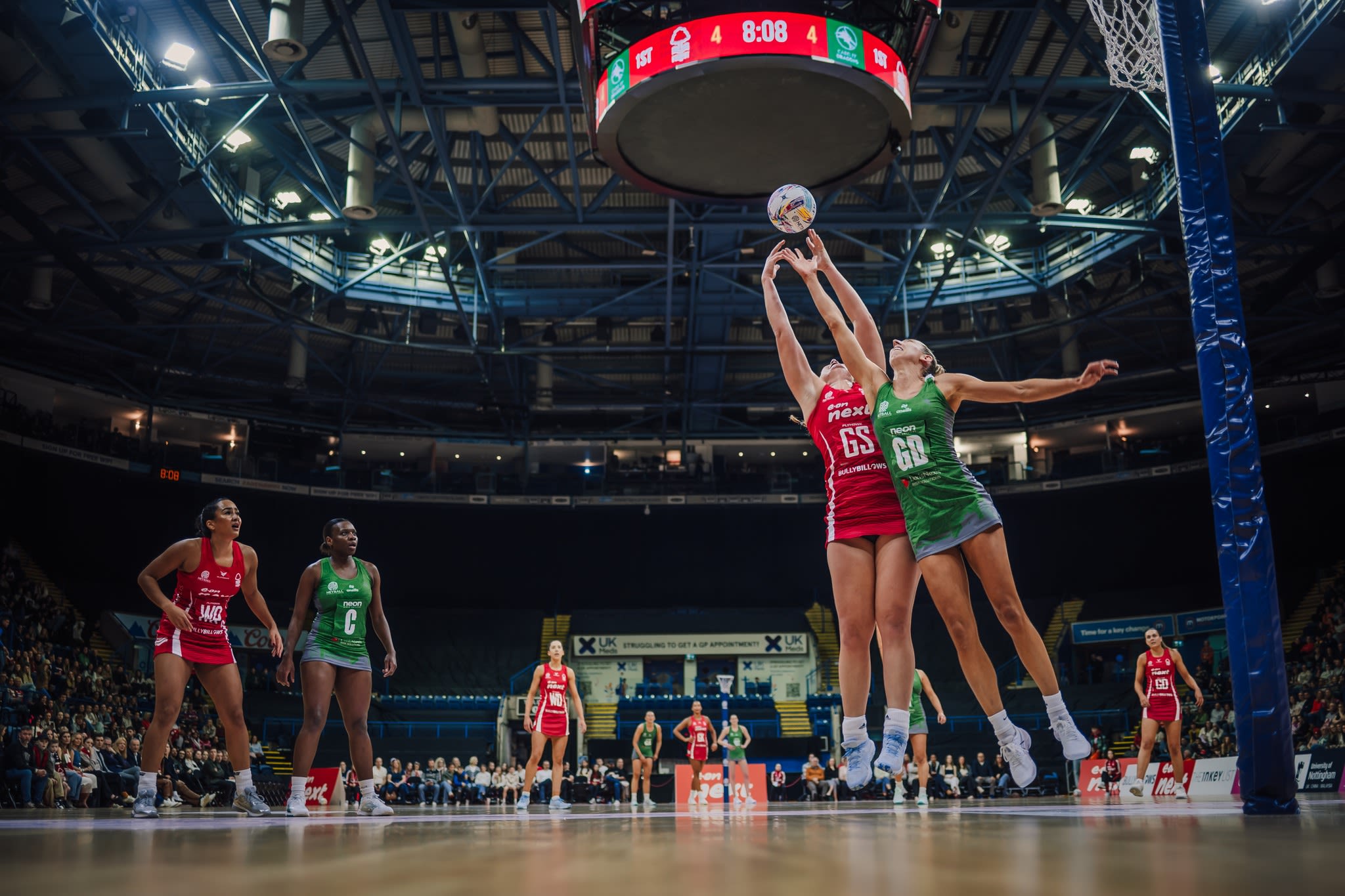
What’s interesting is that Nottingham Forest lead the charge in scoring Super Shots, however they only sit fifth in the table - which makes you wonder about their ratio of one point shots versus two pointers (we’ll look at that in a moment).
Their top scorer with 118 Super Shots is Rolene Streutker, who joined the club after playing in the SSN last season. She’s had experience with the Super Shot before, which now makes sense why she’s scored 43 more than the next highest performer.
If you look a little deeper as to why Loughborough Lightning are also performing well, you’ll discover their three shooters also have the background needed for success.
Ella Clark has previously played basketball for Team GB, so has the experience of shooting from a further distance.
Sammy Wallace-Joseph has played in the SSN since the inception of the Super Shot in Australia, so knows exactly what is needed to execute the perfect shot.
And Berri Neale is making her NSL debut this season - she’s young, adaptable and extremely talented.
However, a team not utilising the Super Shot as effectively are Manchester Thunder, with only 75. This is interesting for a number of reasons.
Firstly, Manchester Thunder sit third in the current league standings. They have only scored 75 Super Shots, which is 50 behind London Pulse (125) and 55 behind Loughborough Lightning (130) who sit above them in the league. This means their strategy and game plan leans towards scoring more one point shots than their opponents and restricting the other team’s ability to score Super Shots against them.
Additionally, all other teams have three or four Super Shot scorers. In comparison, Manchester Thunder only have one - Elmeré van der Berg. She actually is the second highest scorer of Super Shots across the league - however with no other successful shooters, her team rely heavily on her composure in the big moments.

As expected, Nottingham Forest had the biggest percentage of Super Shot goals contributing to their overall goals scored tally. And Manchester Thunder the least. Which again makes sense given they have the highest and lowest number of Super Shots scored.
Of all the goals scored by Nottingham Forest, 24.08% have come from a Super Shot. It’s evident they rely on their ability to convert these shots to force the game in their favour. But their opponents also know this.
“We have to adapt how we defend based on the team we are playing. Nottingham Forest prefer to use their Super Shot at the end of each quarter, so the defensive skillset we need to stop this from happening is different to when we defend the one point shots."
In contrast, only 11.47% of goals for Manchester Thunder have come from the Super Shot - even though they have scored the most shots in the league. From watching them play, their shooters look far more comfortable shooting from the inner circle instead of the outer area.



Out of the 44 games that have currently been played, ten results would theoretically have been different had the Super Shot not been in play.
In three games, the losing team would have lost by five points or less - meaning they would have gained a bonus point.
Also, in three different games, the opposite would have happened. The losing team would have lost by more than five points - meaning they would not have gained the additional bonus point.
And in four of the games, there would have been a different winner.
Let’s take a closer look.



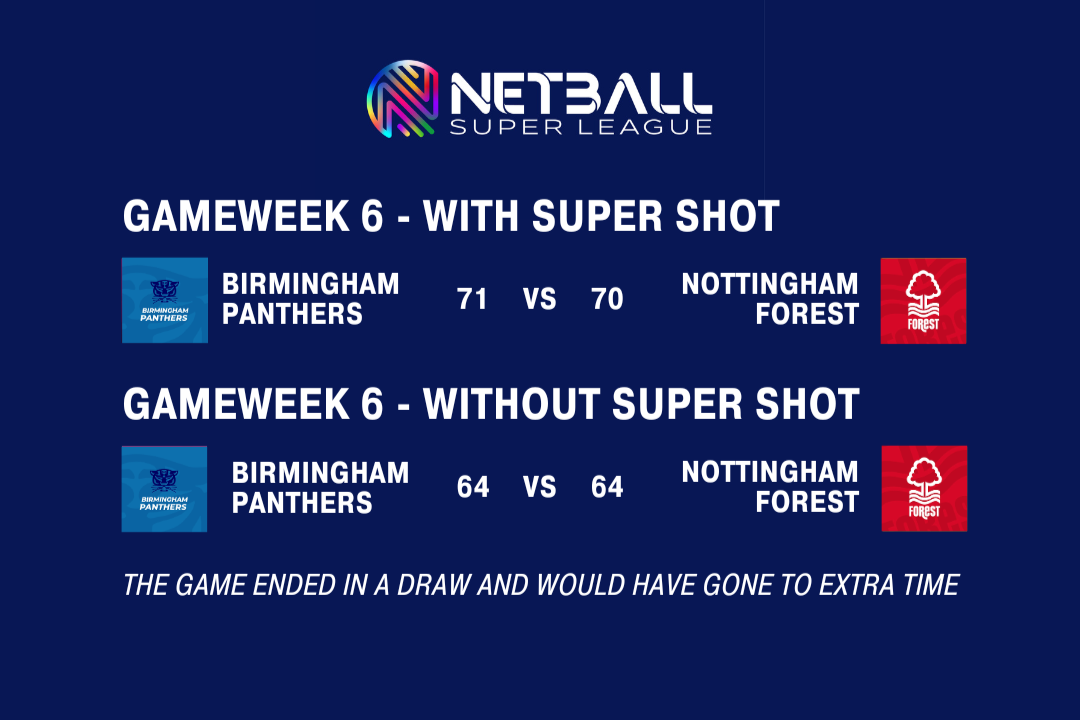
In gameweek six, NSL Birmingham Panthers edged to a narrow victory over fellow NSL newcomers Nottingham Forest - winning by just one point. However Birmingham Panthers also scored one extra Super Shot, seven in comparison to their opponents’ six.
This means, had the Super Shot not been in play, the game would have ended in a draw. Therefore, extra time would have been played - which consists of two lots of five minute sections. If after extra time the scores are still level, teams continue to play until one team is two points ahead.
Scoring that one extra Super Shot really was the deciding factor in who won this fixture.
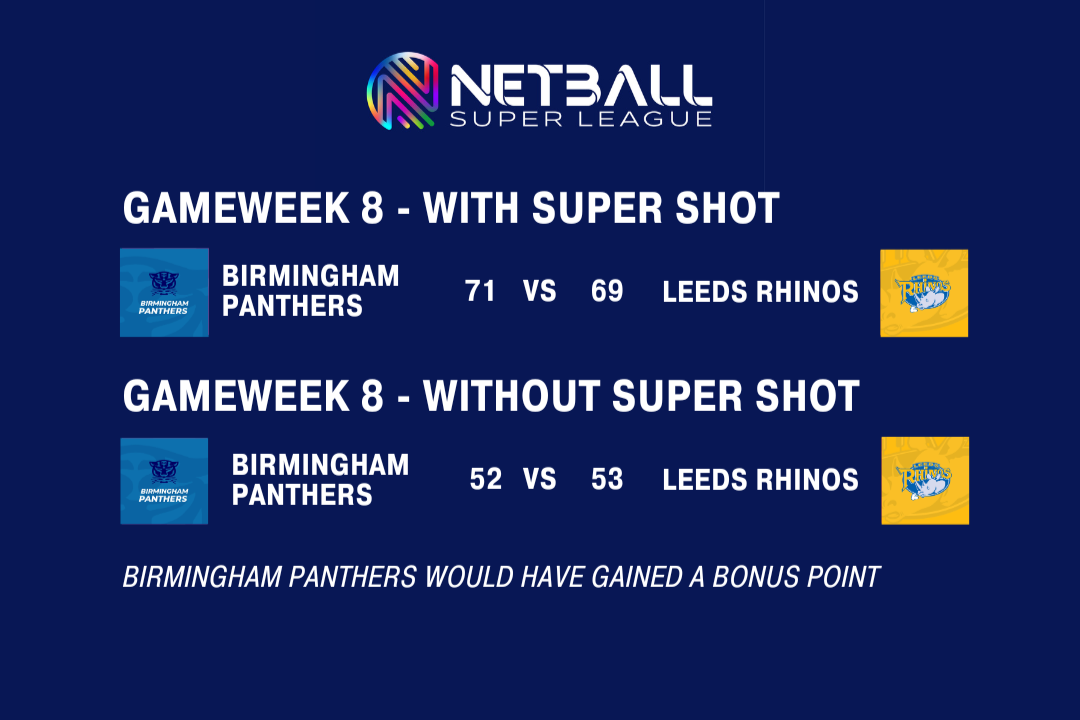
Gameweek eight is where this season saw the most controversy, and it was in the fixture featuring Birmingham Panthers and Leeds Rhinos. With less than a minute on the clock in the fourth and final quarter, Birmingham Panthers led by just two points. Leeds Rhinos then scored what they believe to be a Super Shot to level the game - which is also what displayed on the in-venue scoreboard. However, the on-court umpire only awarded it as a one point shot.
Leeds Rhinos then worked the ball into the shooting area in the last move of the game, believing they only needed one point to secure the win - so of course they went for the less risky one point shot. However, due to the umpire scoring the previous shot as a single, Leeds in fact only tied the game rather than winning it.
The game then continued into extra time and Birmingham Panthers went on to win the game.
This is where it gets controversial. Had the in-venue scoreboard reflected the points awarded by the umpire and Leeds Rhinos been aware they were still trailing by one point, they could have made the decision to play a riskier Super Shot to try to win the game with their final attempt. Human error led to this and unfortunately on-court decisions cannot be overturned retrospectively despite any form of appeal.
But instances like this really do show how the Super Shot has the ability to change the result of the game with the final throw of the ball. And it’s things like this that will keep the crowds captivated throughout the full 60 minutes of a game.
So with those ten results theoretically being changed by the Super Shot - what impact would it have had on the league?
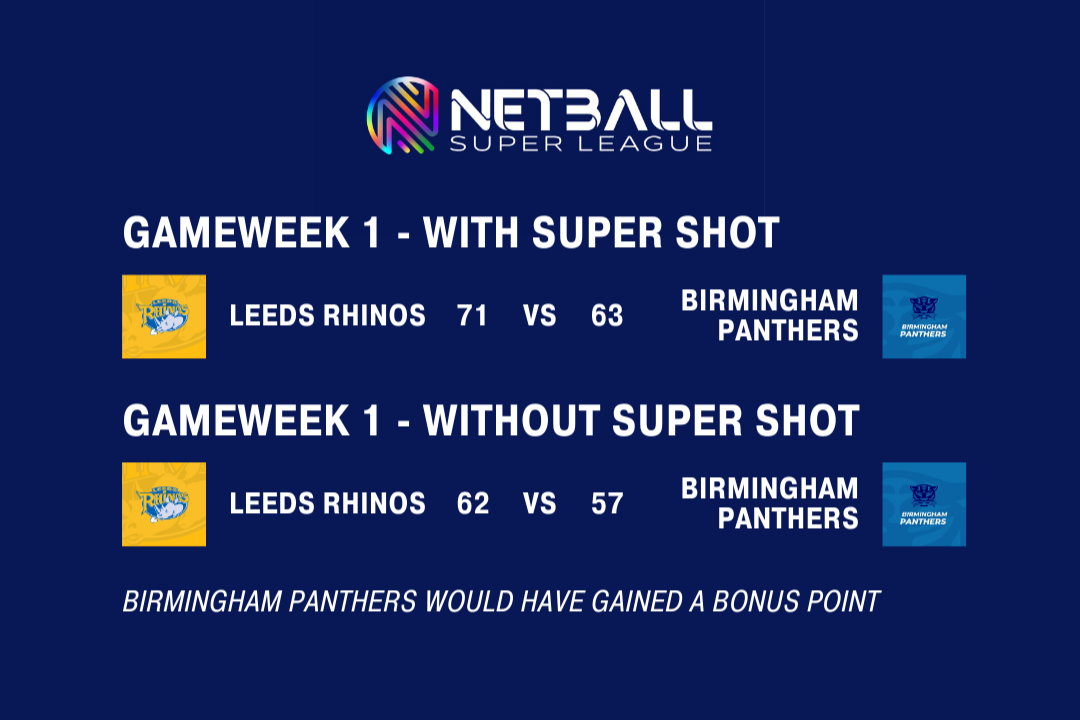
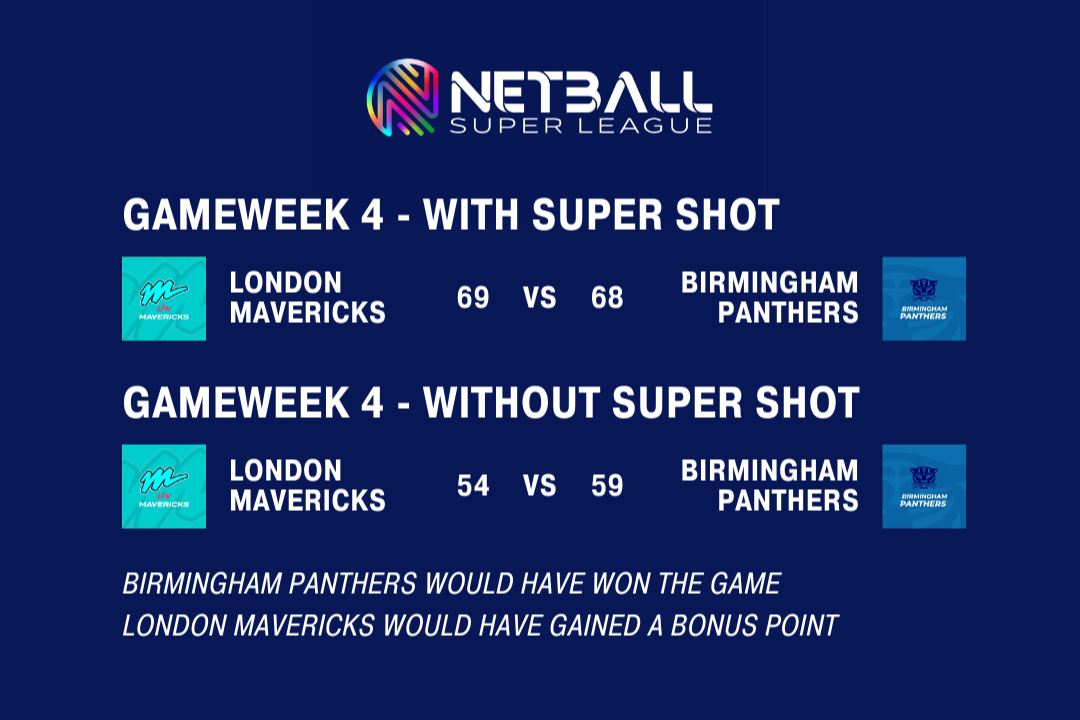
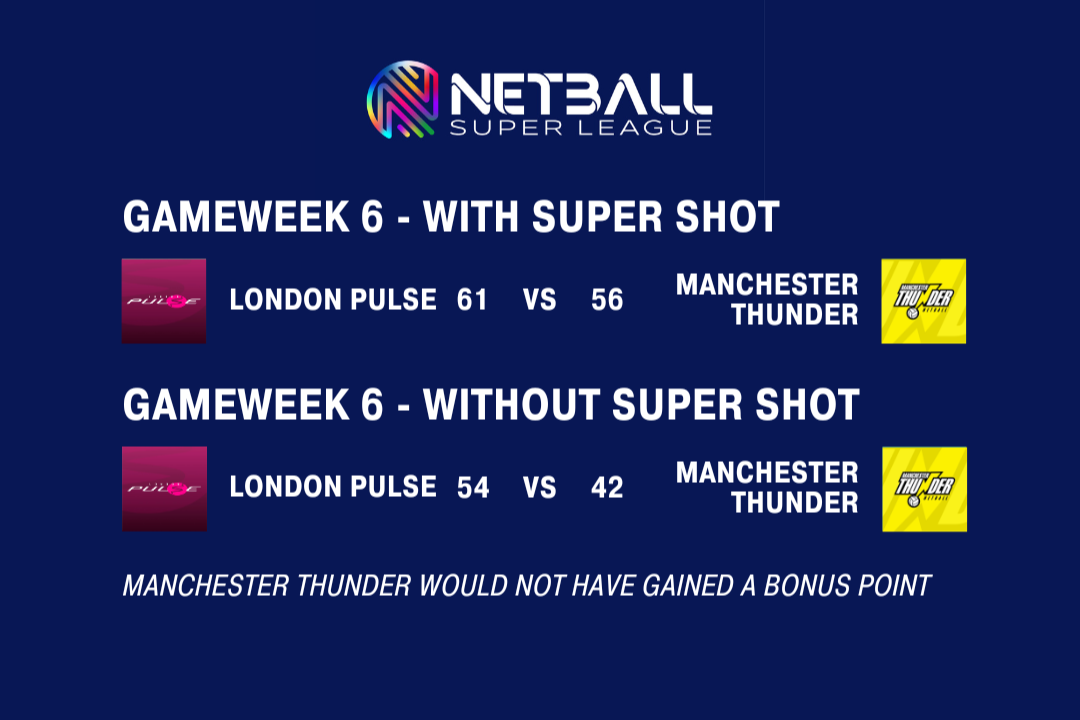
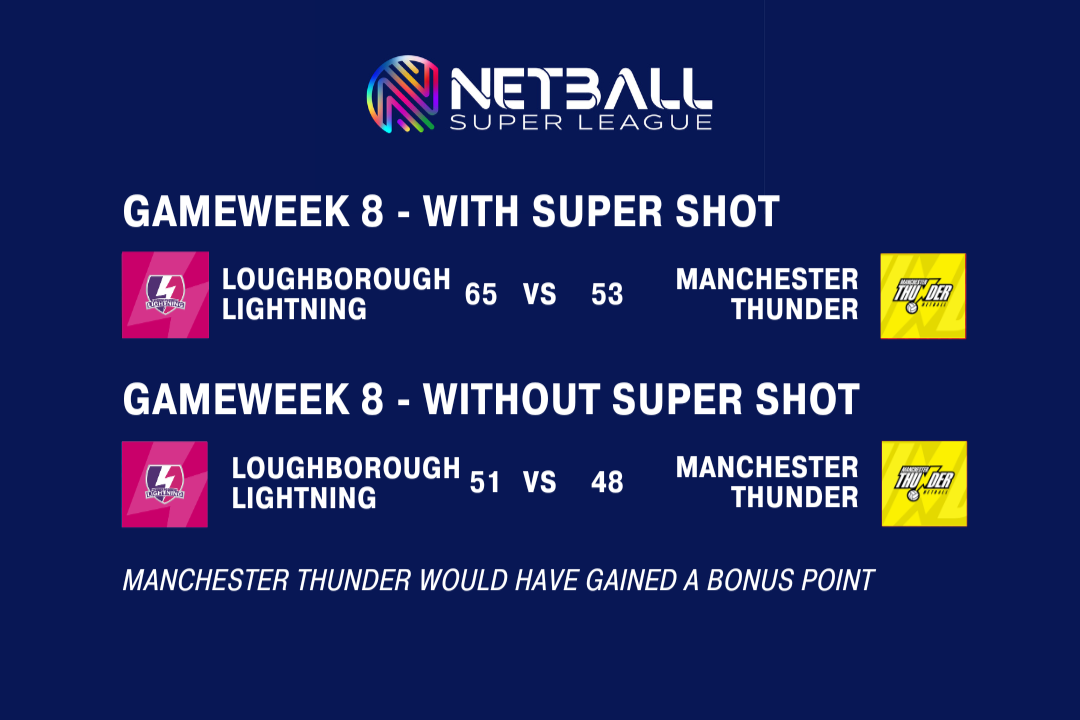
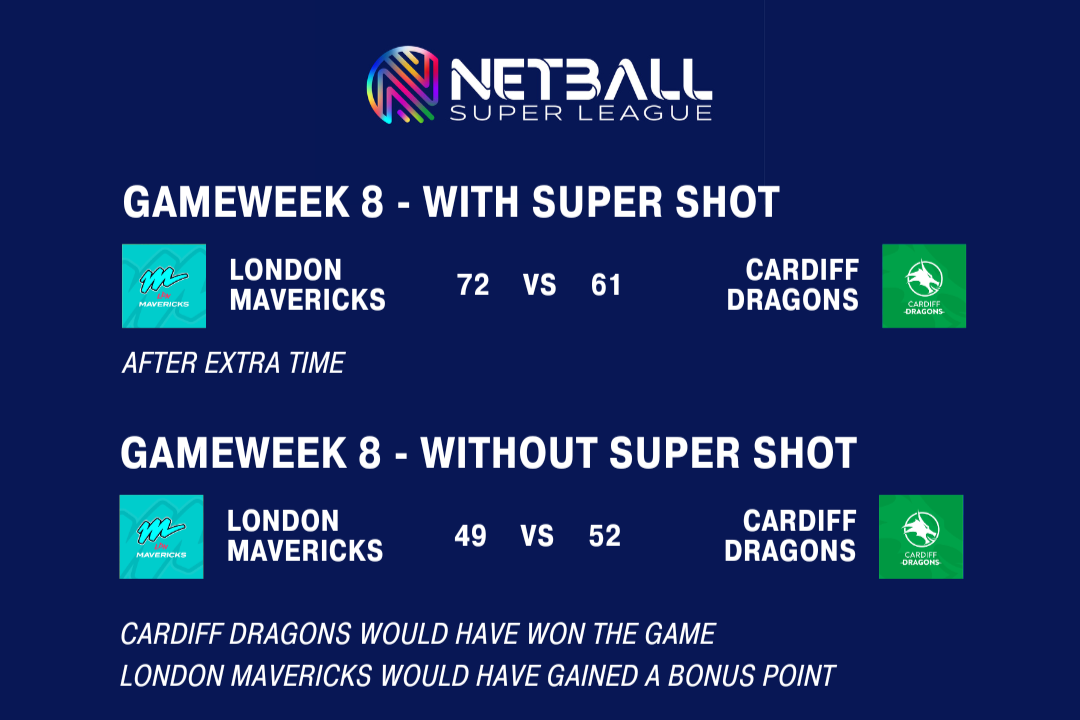
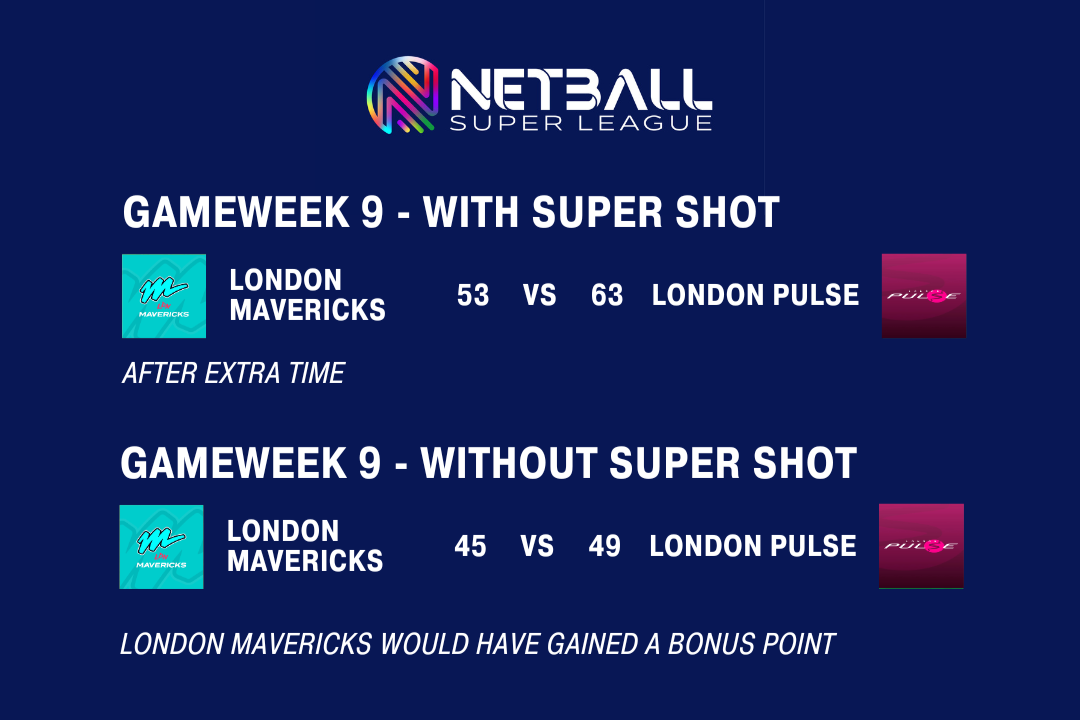
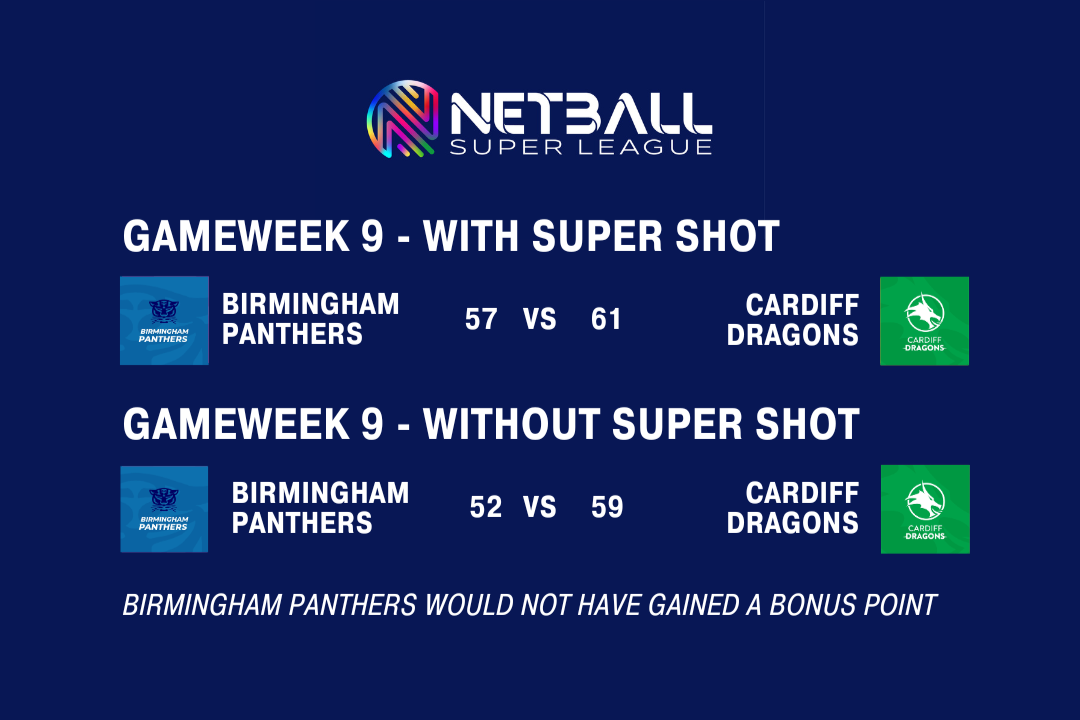
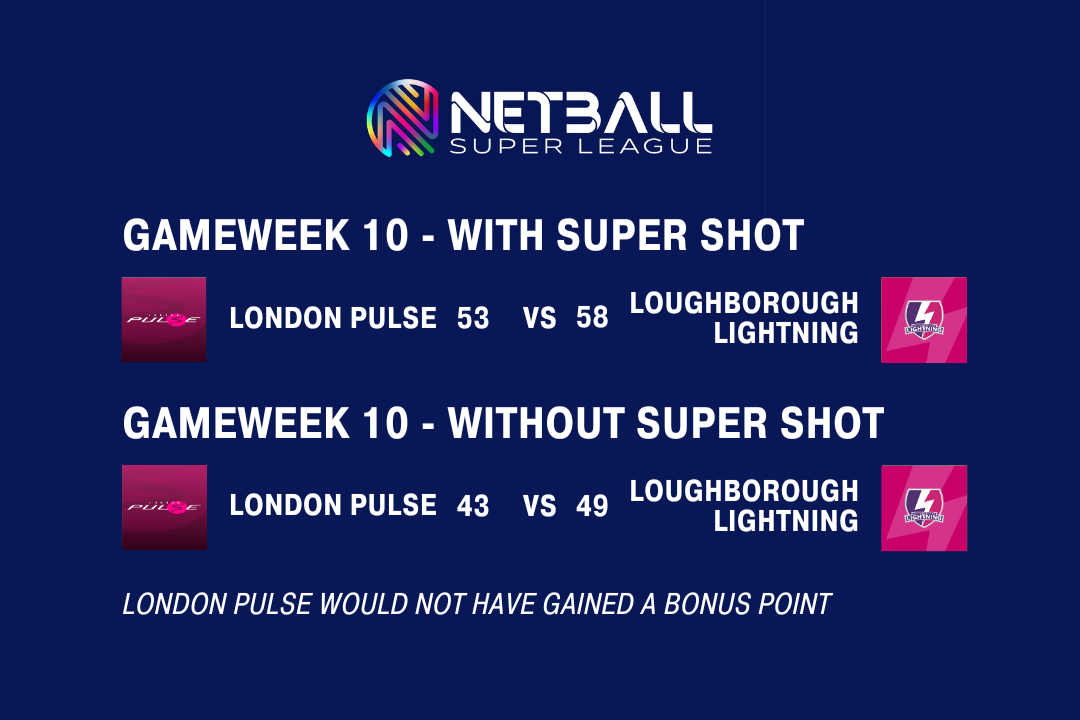
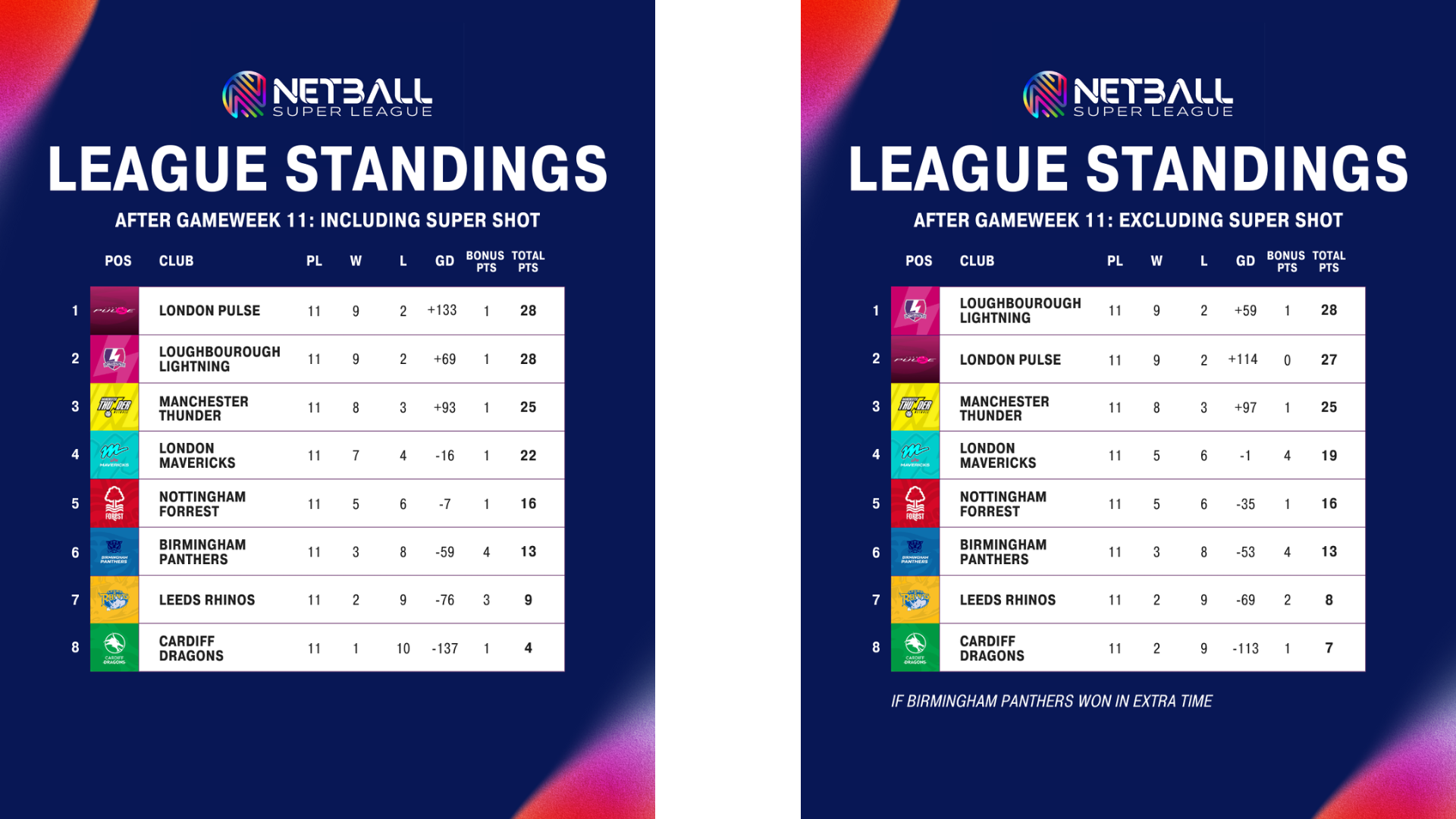
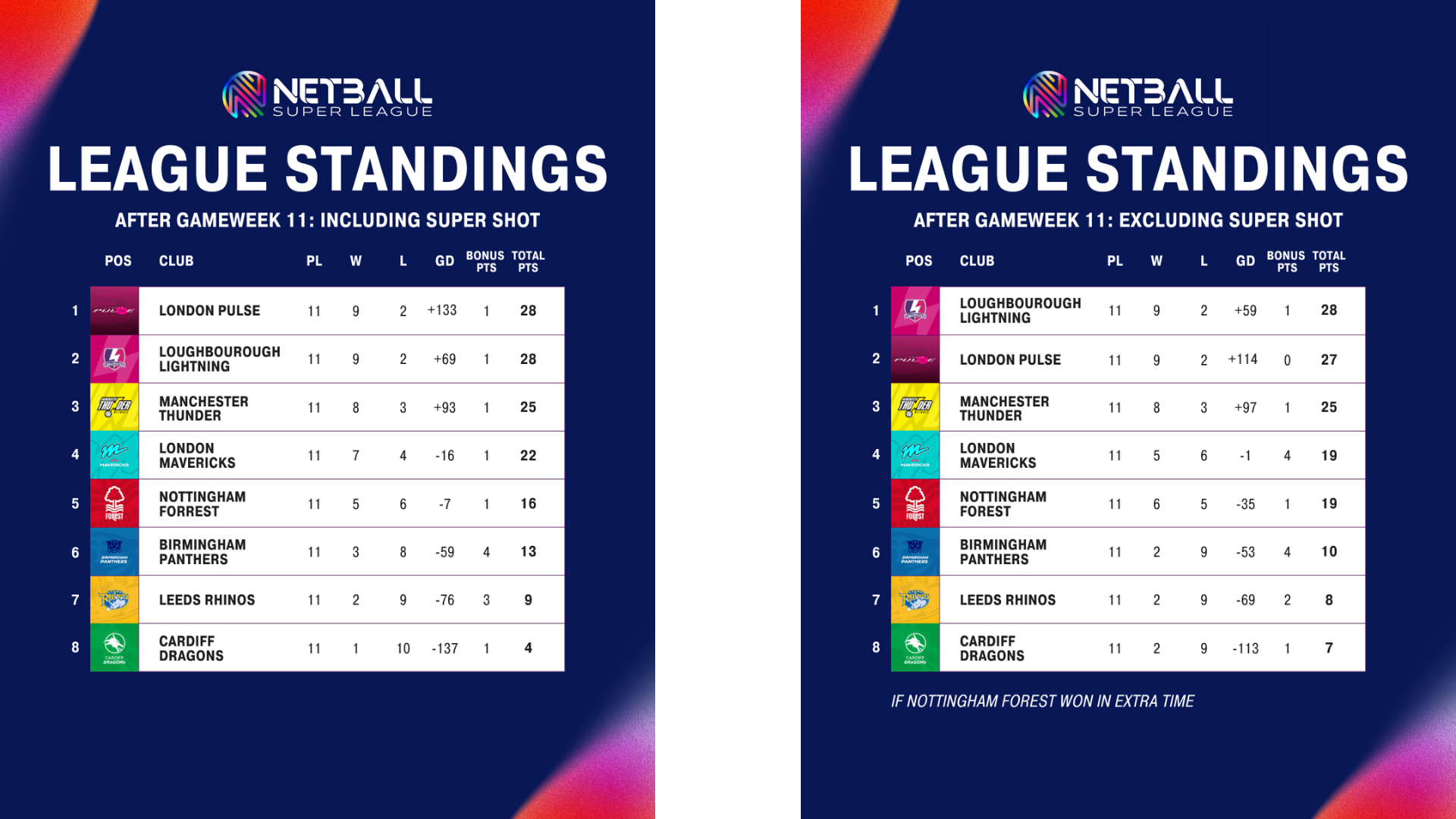
At the top of the table, Loughborough Lightning jump above current leaders London Pulse as they drop a bonus point. With the top four teams progressing to the playoffs and the team at the top getting home advantage, this could be significant.
London Mavericks would remain in fourth, even though two of their wins would have actually been losses. This is because they would have gained an additional three bonus points.
At the bottom of the table the gap between Cardiff Dragons and Leeds Rhinos would have been reduced to just one point, given that Cardiff would have earned an additional win.
The most interesting part, for me, is the game that would have ended in a draw between Birmingham Panthers and Nottingham Forest. The result of this game could have made the difference as to who qualified in fourth place for the playoffs.
Currently London Mavericks occupy that position, however if Nottingham Forest had won, they would have drawn level on points. And with only three gameweeks remaining, it’s anybody's guess who will have secured that fourth spot.
So here comes the million dollar question - has the Super Shot really changed the game this season?
““Initially I thought it was simply a cynical way of bringing on-board more sponsors, but after watching the games I think the Super Shot has actually had more of a positive effect on games than I originally thought pre-season. The Super Shot is really fun and can hugely affect results and in-game momentum. One criticism of Netball is that once a team has a sizable lead they will often go-on to win the game, which can be a boring narrative - but with the inclusion of the Super Shot it allows for games to be contested right up until the end of the fourth quarter."
“I initially thought that the Super Shot would be a bad idea for the league as the whole structure of the game completely changes during the last two minutes for each quarter. However, I feel that the Super Shot has been a great addition to the game overall, as I'm a lot more excited to see what happens during the end of each quarter and how quickly the score can change. I do think there is a lot more pressure on the shooters as it's not always about how many single shots they can score now but their accuracy on two point shots. Ultimately if a team has a consistent two point shooter like [Nottingham] Forest and [Loughborough] Lightning, they are more likely to win a game.”


You’re welcome to make up your own mind, but for me?
Yes it has.
The Netball Super League table would look different (albeit theoretically) had the Super Shot not been in play. Especially the positions at the top of the table.
That top four is so important to all teams, not just for making the playoffs but also determining who has that home advantage. And for a team like Loughborough Lighting who are looking to win the title for a record breaking third year in a row - that home advantage could make all the difference in making it to the grand final.
Outside of league position though, I do feel the Super Shot has changed the game. You can notice a shift in the tactics when moving into the final five minutes of each quarter. Teams are navigating the game with a different dynamic and intensity.
But most importantly, I think the Super Shot has been a game changer for the fans. In a league that is looking to grow a new audience and keep them captivated, the element of intensity that the Super Shot brings really is keeping crowds on the edge of their seat.


 Built with Shorthand